The short version
Tretinoin is one molecule sold on a ladder: 0.025 percent, 0.05 percent, and 0.1 percent, as a cream or a gel, applied once nightly as a pea-sized amount for the whole face. [1][2] Almost nobody should start at the top. The standard move is to start at 0.025 percent, let skin adapt, and step up only if you are tolerating it and want more effect after a real trial. [1][3]
Higher strength means faster and more irritation more than it means better. This article lays the ladder out the way a prescriber thinks about it: who starts where, cream versus gel, how much product is actually correct, and what earns a step up.
The ladder, written out
- 0.025 percent, the standard start. Enough to work, gentle enough that most people can reach nightly use within weeks. First prescription for most retinoid-naive skin. [1][3]
- 0.05 percent, the workhorse middle. Where many people land long-term. Also the strength with the deepest evidence for sun-damage work: the long photoaging trials used 0.05 percent. [4][5]
- 0.1 percent, the ceiling. More irritation for faster change; overall results converge with lower strengths over time, so it is chosen deliberately, not by default. [5][6]
Microsphere and lotion formulations exist at their own strengths and release the drug more gently; they also tolerate benzoyl peroxide better than conventional tretinoin does. [1][3] If your pharmacy fills a generic that looks different from what you read about, the percent strength is the number that matters.
Cream vs gel, honestly
Cream is more moisturizing and the usual pick for dry, sensitive, or mature skin, and for photoaging work. Gel is lighter and dries down clean, which suits oily, acne-prone skin. [1][3] The gel has a built-in guardrail: over-applying makes it pill and ball up on the skin, which the label notes tends to stop people from using too much. [2] Neither form is stronger at a given percent; this is a texture-and-tolerance choice.
How much: the pea rule is not a suggestion
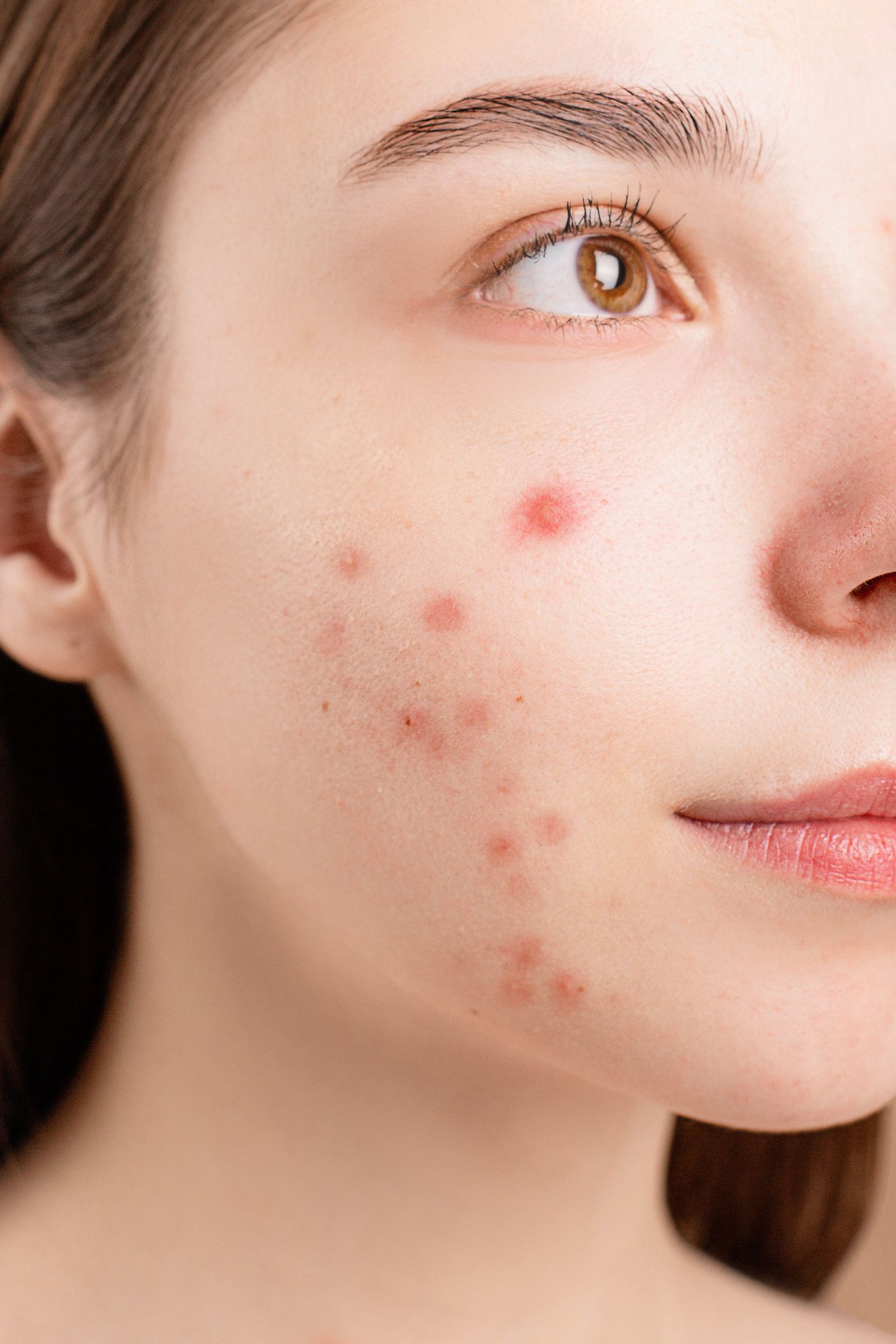
One pea-sized amount, spread thinly over the entire affected area, not dabbed on individual spots. [1][2] Tretinoin treats the skin, not the pimple: it works by normalizing how pores turn over everywhere, which is also why spot-treating with it misses the point. [1] Using more does not clear acne faster; it reliably buys more redness and peeling. The full application technique, including moisturizer ordering, is in the first-night briefing.
Who starts lower and slower
- Eczema-prone or sensitive skin: lowest strength, every second or third night to start, or adapalene instead, which runs gentler at comparable effect. [1][3]
- Dry climates and winter starters: the label flags wind and cold as irritation multipliers; cream over gel, and a slower ramp. [2]
- Skin fresh off harsh products: strong acids, scrubs, and drying agents get a rest period before tretinoin starts, per the label. [2]
What earns a step up
Two conditions, both required: you tolerate the current strength on a nightly schedule, and response is real but incomplete after an adequate trial, which for acne means about 12 weeks, not 3. [1][3] The label is explicit that first results can take 2 to 3 weeks and definite benefit more than 6, so a strength change before that is answering a question the trial has not asked yet. [2] The step is 0.025 to 0.05, then 0.05 to 0.1, each with its own settling-in period. What the early weeks look and feel like, including the flare that is not failure, is in the first 8 weeks article, and severe reactions that mean stop rather than step down are in warning signs.
If the top of the ladder still is not enough, the answer is not more tretinoin; it is a different or added therapy, covered in when acne needs more than tretinoin.
What it costs with Well Revolution
$80 for the Limited Treatment Plan. If approved, you will receive a 90 day treatment plan with 7 days a week support. Perfect for first time patients who are trying it out.
Or $90 for the Unlimited Membership. If approved, you will receive 3 months of care with 7 days a week support, plus unlimited prescriptions, lab tests, imaging orders, letters and referrals with same day care, cancel anytime, no fees. Perfect for established patients looking for full care.
Getting started with Well Revolution
A licensed US provider picks your starting strength and form from your photos, skin history, and climate, in chat, same day, and steps it up on evidence rather than on a subscription schedule. Strength changes are part of the care, not a new fee. Message us and we confirm coverage in your state. New to the whole process? Start at how to get a tretinoin prescription online.
References
- Eichenfield DZ, et al. Management of Acne Vulgaris: A Review. JAMA, 2021. PubMed 34812859
- Retin-A (tretinoin) prescribing information. Via FDA DailyMed. DailyMed
- Reynolds RV, et al. Guidelines of care for the management of acne vulgaris. Journal of the American Academy of Dermatology, 2024. PubMed 38300170
- Ellis CN, et al. Sustained improvement with prolonged topical tretinoin (retinoic acid) for photoaged skin. Journal of the American Academy of Dermatology, 1990. PubMed 2229490
- Weiss JS, et al. Topical tretinoin improves photoaged skin. A double-blind vehicle-controlled study. JAMA, 1988. PubMed 3336176
- Zaenglein AL. Acne Vulgaris. New England Journal of Medicine, 2018. PubMed 30281982
Reviewed by PA Michael Rubio, US Medical Director