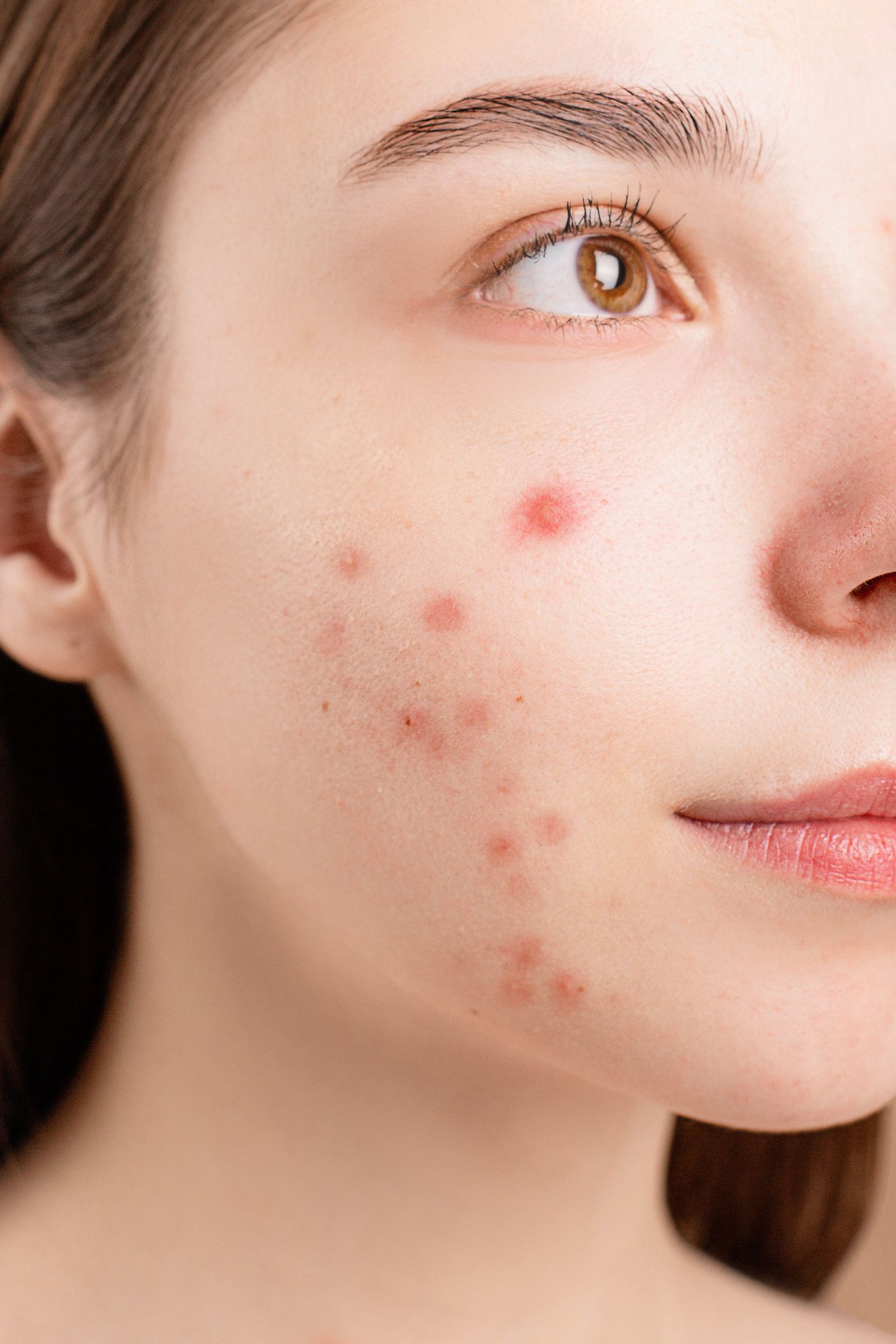
Get persistent breakouts assessed before trying another acne treatment. Send clear photos, how long the bumps have been there, whether they itch, and every acne product or antibiotic you have tried. A provider can assess whether the next step is adjusting acne treatment, considering an antifungal, or examining the skin in person.
Care starts by chat with a licensed provider. Message us and we will confirm coverage in your state.
Why isn't tretinoin clearing my breakouts?
Usually because it has not had long enough. Topical retinoids are a strongly recommended first-line acne treatment, and the Retin-A label says results show after 2 to 3 weeks but more than 6 weeks may pass before the benefit is definite, often after an early flare. [6][7] But if you are past 3 months, applying it correctly, and the bumps on your forehead, chest or back look the same or worse, there is a second explanation worth ruling out: the breakouts may not be acne at all.
Fungal acne is the everyday name for Malassezia folliculitis, formerly called Pityrosporum folliculitis. It is an overgrowth of a yeast that normally lives on skin, growing inside the hair follicles, and it is commonly misdiagnosed as acne vulgaris. [2][8] It does not respond to retinoids, benzoyl peroxide or antibiotics the way bacterial acne does, and it can persist for years on standard acne medication. [2] The fix is an antifungal, which is a different prescription from the one you are using now.
This article is the sorting step: how the two conditions differ, why a mirror is an unreliable judge, and what a same-day chat visit with a licensed US provider can and cannot settle.
What does fungal acne look like compared with regular acne?
The tell is uniformity. In a review of 110 confirmed cases, the eruption was numerous 1 to 2 mm papules and pustules that all looked alike, typically on the forehead running into the hairline and on the upper back. [1] Bacterial acne is the opposite: a mix of blackheads, whiteheads, papules, pustules and sometimes deeper nodules at different stages. [5] The absence of comedones (blackheads and whiteheads) is the single feature that most reliably separates the two. [5]
- Itching. 65% of patients in that series reported itch when it was recorded, and reviews put it at more than half of cases. Itch without comedones is the signature; it is not a feature of typical acne. [1][3][5]
- Location. Forehead and hairline, chest, upper back and shoulders, sometimes the backs of the arms. [1][2][8]
- Triggers. Sweat, heat, humidity, exercise and oily skin all feed the yeast, so flares after a hot summer or a gym streak are typical. [5][8]
- Medication history. More than 75% of the 110 patients had acne that had recently been treated with antibiotics. Antibiotics clear the bacteria that keep yeast in check; corticosteroids and immunosuppression do the same. [1][2][5]
Why would tretinoin make no difference, or make it worse?
Tretinoin is indicated for acne vulgaris. It works by loosening the cells lining the follicle so fewer microcomedones form, which over weeks cuts the inflamed lesions that follow. [7] A yeast growing inside a follicle is not a comedone problem, so the drug has nothing to act on. What you get is the irritation without the payoff. If a doxycycline or minocycline course was added along the way, the picture can genuinely worsen: the antibiotics recommended for acne do nothing to Malassezia and remove its bacterial competition. [1][5][6] A 2024 review puts it plainly: misdiagnosis leads to inappropriate use of antibiotics or acne medications, which may exacerbate the condition. [5]
Two more ways the diagnosis gets buried. A steroid cream borrowed for the itch can flatten the bumps and leave dark marks that hide the pattern; in one published case a biopsy was needed to find the yeast underneath. [4] And the two conditions can coexist, so someone can have real acne responding to tretinoin on the cheeks and fungal folliculitis not responding on the forehead and back. [1][2] That mixed picture is the most common reason people conclude that tretinoin "half works."
Can I tell which one I have by looking in the mirror?
Not reliably, and clinicians miss it too. The condition is described as under-recognized in the literature precisely because it looks so much like acne at a glance. [1][2] In one case a woman spent three months on acne treatments for facial papules before a microscope confirmed yeast; she improved within two weeks of antifungals. [3] The pattern above raises suspicion. What confirms it is a potassium hydroxide (KOH) preparation, a scraping from a pustule examined under a microscope, described in the 2024 review as a quick, practical and effective way to settle uncertain cases. [5] That is an in-person test. A chat visit can read the pattern, the history and the treatment response, and a provider can start treatment on that basis, but a photo cannot see yeast.
How is fungal acne treated?
With an antifungal, and the response is usually fast, which is itself a clue that the diagnosis was right. In the 110-case series the most common treatment was ketoconazole shampoo used on the skin, which led to improvement or resolution in most patients; some needed an oral azole antifungal. [1] Reviews rank oral antifungals as the most effective option with rapid improvement, and case reports describe significant clearing within two weeks. [2][3] Which one a provider chooses depends on how much skin is involved, how long it has been going, what you have already tried, and your liver and medication history. Dosing is a prescriber decision, not a number to copy from a blog.
Expect relapses. The yeast is part of normal skin flora and the conditions that grew it come back every summer, so many patients keep a maintenance routine such as an antifungal wash a few times a week. [5] If acne is genuinely present alongside it, the two are treated together, and tretinoin can stay in the plan for the acne it is actually good at. [2]
Should I stop tretinoin while this gets sorted out?
Do not throw the tube away on suspicion. If a provider confirms the forehead and back bumps are fungal, tretinoin is simply not the tool for those areas; if real acne exists elsewhere, it keeps working there. If you are under 8 to 12 weeks in, the early flare and dryness are expected and covered in the first 8 weeks article; this question is aimed at people well past that window. [7] Body breakouts that are true acne have their own plan in tretinoin for back and chest acne, and the other reasons a topical retinoid stalls (nodules, hormonal patterns, rosacea lookalikes) are mapped in when acne needs more than tretinoin.
When should I be seen in person instead?
- No change after a full antifungal course. A KOH scraping or biopsy settles the question rather than another round of guessing. [4][5]
- You are immunosuppressed, on long-term steroids, or the eruption is spreading fast. Those are the settings where the yeast overgrows most and where a wider work-up matters. [2][5]
- Painful nodules, cysts or scarring. That is severe acne, not fungal folliculitis, and belongs in the isotretinoin conversation. [6]
- You are pregnant or trying. The tretinoin label says use in pregnancy only if the benefit justifies the risk, and oral antifungals need their own check before use. [7]
What it costs with Well Revolution
$80 for the Limited Treatment Plan. If approved, you will receive a 90 day treatment plan with 7 days a week support. Perfect for first time patients who are trying it out.
Or $90 for the Unlimited Membership. If approved, you will receive 3 months of care with 7 days a week support, plus unlimited prescriptions, lab tests, imaging orders, letters and referrals with same day care, cancel anytime, no fees. Perfect for established patients looking for full care.
Getting started with Well Revolution
Care is chat-based with a licensed provider, same day, no appointment needed. Send clear photos of the affected areas in daylight, how long the bumps have been there, whether they itch, every acne product and antibiotic you have used and for how long, and anything that makes it flare; if the pattern fits fungal folliculitis you may be started on an antifungal, and if it fits acne the tretinoin plan gets adjusted instead, starting from how to get a tretinoin prescription online. We confirm coverage in your state before anything is committed.
References
- [1] Prindaville B, et al. Pityrosporum folliculitis: A retrospective review of 110 cases. Journal of the American Academy of Dermatology, 2018.
- [2] Rubenstein RM, Malerich SA. Malassezia (pityrosporum) folliculitis. Journal of Clinical and Aesthetic Dermatology, 2014.
- [3] Malgotra V, Singh H. Malassezia (Pityrosporum) Folliculitis Masquerading As Recalcitrant Acne. Cureus, 2021.
- [4] Cohen PR, et al. Malassezia (Pityrosporum) Folliculitis Incognito: Malassezia-associated Folliculitis Masked by Topical Corticosteroid Therapy. Cureus, 2020.
- [5] Martínez-Ortega JI, et al. Malassezia Folliculitis: Pathogenesis and Diagnostic Challenges. Cureus, 2024.
- [6] Reynolds RV, et al. Guidelines of care for the management of acne vulgaris. Journal of the American Academy of Dermatology, 2024.
- [7] Bausch Health US. Retin-A (tretinoin) cream and gel prescribing information. FDA DailyMed, label revised 2024.
- [8] American Academy of Dermatology. Think that DIY acne trick is helping? Here's what dermatologists want you to know. 2025.
Reviewed by PA Michael Rubio, US Medical Director