Conditions
Shingles Treatment Online
Shingles antivirals work best started within 72 hours. A rash near the eye, or ear pain with facial weakness, needs in person care the same day.

PA Michael Rubio
September 9, 2026
Shingles antivirals work best started within 72 hours. A rash near the eye, or ear pain with facial weakness, needs in person care the same day.

Shingles runs on a clock. Antiviral treatment works best when it is started within 72 hours of the rash appearing, and the benefit fades the longer you wait [1][2]. That is why a painful, one sided, blistering rash is worth acting on the day you notice it rather than the day you can get an appointment.
There is a second question running alongside the first, and it is the one this article exists for. Most shingles is a prescription problem. Two presentations are not. Shingles involving the eye, and shingles involving the ear with weakness on one side of the face, need someone to physically look at you, urgently. Those are not treated by messaging a prescriber and waiting for a pharmacy.
None of those are a reason to be embarrassed about turning up somewhere. They are the reason the rest of this article is safe to read.
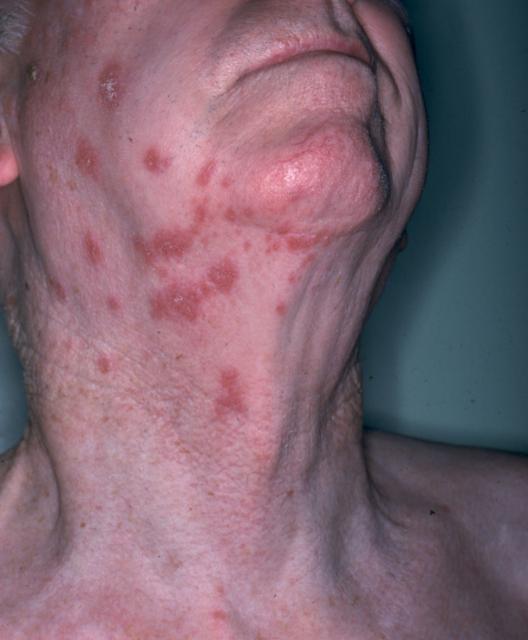
If you have had chickenpox, the varicella zoster virus never left. It went quiet inside a nerve root and stayed there. Shingles is that virus waking up and travelling back out along a single nerve, which is why the rash sits in one band on one side of the body and usually stops dead at the midline [1]. Age, illness, stress and anything that suppresses the immune system make reactivation more likely.
The classic sequence is burning, tingling, itching or a deep ache in one patch of skin for one to several days, then a cluster of blisters in that same patch. The pain arriving before the rash is why shingles gets mistaken for a pulled muscle, a kidney stone or a dental problem in its first 48 hours, and that mistake is what eats the treatment window.
Assuming none of the urgent findings above apply, here is what actually helps, in the order it matters.
The prescribing information for valacyclovir says to start within 48 hours of rash onset, and states plainly that its effectiveness has not been established when treatment is begun more than 72 hours after the rash appears [2]. The adult regimen on the label for shingles is 1 gram three times a day for seven days [2]. Acyclovir and famciclovir are the other two standard options, and all three shorten the time lesions take to heal, cut down new blister formation and reduce the severity of the acute pain [1].
If you are already past 72 hours, it is still worth being assessed. New blisters still forming, an immune problem, or any facial involvement can change that calculation, and the pain still needs managing either way.
Shingles is diagnosed largely by how it looks and where it sits. Clear, well lit photos of the whole affected area, plus a close up of the blisters, plus a wider shot showing which side of the body it is on, will get you a decision faster than any description. Include your face and ears in the photos if the rash is anywhere above the collarbone.
Shingles pain is nerve pain and it is often worse than the rash looks. Over the counter acetaminophen or ibuprofen is a reasonable starting point for most people. Cool compresses on the rash, loose cotton clothing over it, and calamine or a similar soothing lotion help with the surface irritation. If the pain is stopping you sleeping or is not touched by over the counter options, say that out loud to a prescriber rather than waiting it out. Poorly controlled pain in the first week is not something to endure quietly.
Cover the rash with a loose, non stick dressing. Do not scratch, and do not pop blisters. Wash your hands after touching the area. This is both an infection point and a contagiousness point.
This is the part that gets stated wrongly everywhere. You cannot give someone shingles. What you can pass on is the chickenpox virus, and only to someone who has never had chickenpox and never had the vaccine, and only through direct contact with fluid from your blisters [7]. Once every blister has dried and crusted over, you are no longer spreading it [1]. Until then, stay away from newborns, from anyone pregnant who has not had chickenpox, and from anyone whose immune system is suppressed.
Shingles can extend. A rash that starts on the scalp on Monday can involve the forehead and eyelid by Wednesday. Read the urgent list at the top of this article again each morning while new blisters are still appearing, and act on it the moment anything on it becomes true.
Postherpetic neuralgia is nerve pain that outlasts the rash, sometimes by months, and it is the most common complication of shingles [7]. It is worth being honest here: a New England Journal of Medicine review reports that, across the randomized trials, antiviral treatment did not significantly reduce how often postherpetic neuralgia developed, even though it speeds healing and eases the acute pain [3]. So antivirals are worth starting for the acute illness, and the case for them is strongest there. They are not a reason to skip pain treatment or to assume the story ends when the rash does.
Go in person, the same day, for anything on the urgent list at the top of this page. Beyond those, get assessed if the pain is severe or is not controlled by over the counter medicine, if the rash looks infected with spreading redness, warmth, pus or increasing pain after the blisters have crusted, if new blisters are still appearing after seven days, or if pain is still present weeks after the skin has healed.
Two specific cases that change the plan. If you are pregnant or breastfeeding, say so up front, because it changes which medicine is appropriate. If your kidney function is reduced, the antiviral dose has to be adjusted, and the label carries specific reduced doses by creatinine clearance [2]. Bring an accurate medication list and any recent kidney results to the conversation.
Uncomplicated shingles on the trunk, buttock or limb, in an adult with a clear photo and no red flags, is a reasonable fit for a chat based assessment. Anything on the face, anything involving the eye or ear, and anything in someone immunosuppressed is not, and we will tell you to be seen rather than send a prescription. Getting that call right is the whole job, and it is the same reasoning as the COVID antiviral window, where speed only helps if the right person is being treated.
The evidence for starting an antiviral is strongest inside that window and the label does not claim effectiveness beyond it [2]. Past it, treatment is a judgment call that depends on whether new blisters are still forming, your immune status and where the rash is. It is still worth asking.
Yes, though it is much less common. Two separate points that are often mixed up. First, valacyclovir is not recommended for treating shingles in children under 18, because safety data for a seven day course are not available in that age group [2]. Second, and independently of that, we treat anyone 18 or under only with a parent or guardian's consent, which is a rule about who agrees to care, not about which medicine is on the label. More on what we need in getting care for your child online.
Usually yes, once the episode has resolved, because having shingles once does not prevent it happening again. In the trial that led to its approval, the recombinant zoster vaccine had an overall efficacy of 97.2 percent in adults 50 and older [5]. Timing after an episode is a conversation with your own clinician.
Often yes, both for the pain and because the rash needs to stay covered around vulnerable people until it crusts over. If you need that in writing, see what a doctor's note can and cannot say.
Shingles is a condition where the delay is usually administrative, not medical. You know something is wrong, and the wait for a slot is what costs you the window.
If the rash started in the last three days, the useful thing to do is start the conversation now.
$50 for a prescription. If approved, you will receive a prescription for an antiviral if you are inside the window and 30 days of support. We are there for those 30 days for follow-up, interpretation, referrals, and treatment if needed. Perfect for a single episode of care.
Or $90 for the Unlimited Membership. If approved, you will receive 3 months of care with 7 days a week support, plus unlimited prescriptions, lab tests, imaging orders, letters and referrals with same day care, cancel anytime, no fees. Perfect for established patients looking for full care.
Care is chat-based with a licensed provider, same day, no appointment needed. Message us with photos of the rash and when it started, tell us where you are, and we will confirm coverage in your state and whether you are inside the 72 hour window.
Reviewed by PA Michael Rubio, US Medical Director
Concerned, need advice, a prescription, refill or referral?
Text a doctor now