Prevention
Doctor's Note for Work Online
What a doctor's note can and cannot say, how it differs from an FMLA certification, and what happens for days no clinician observed.

PA Michael Rubio
September 9, 2026
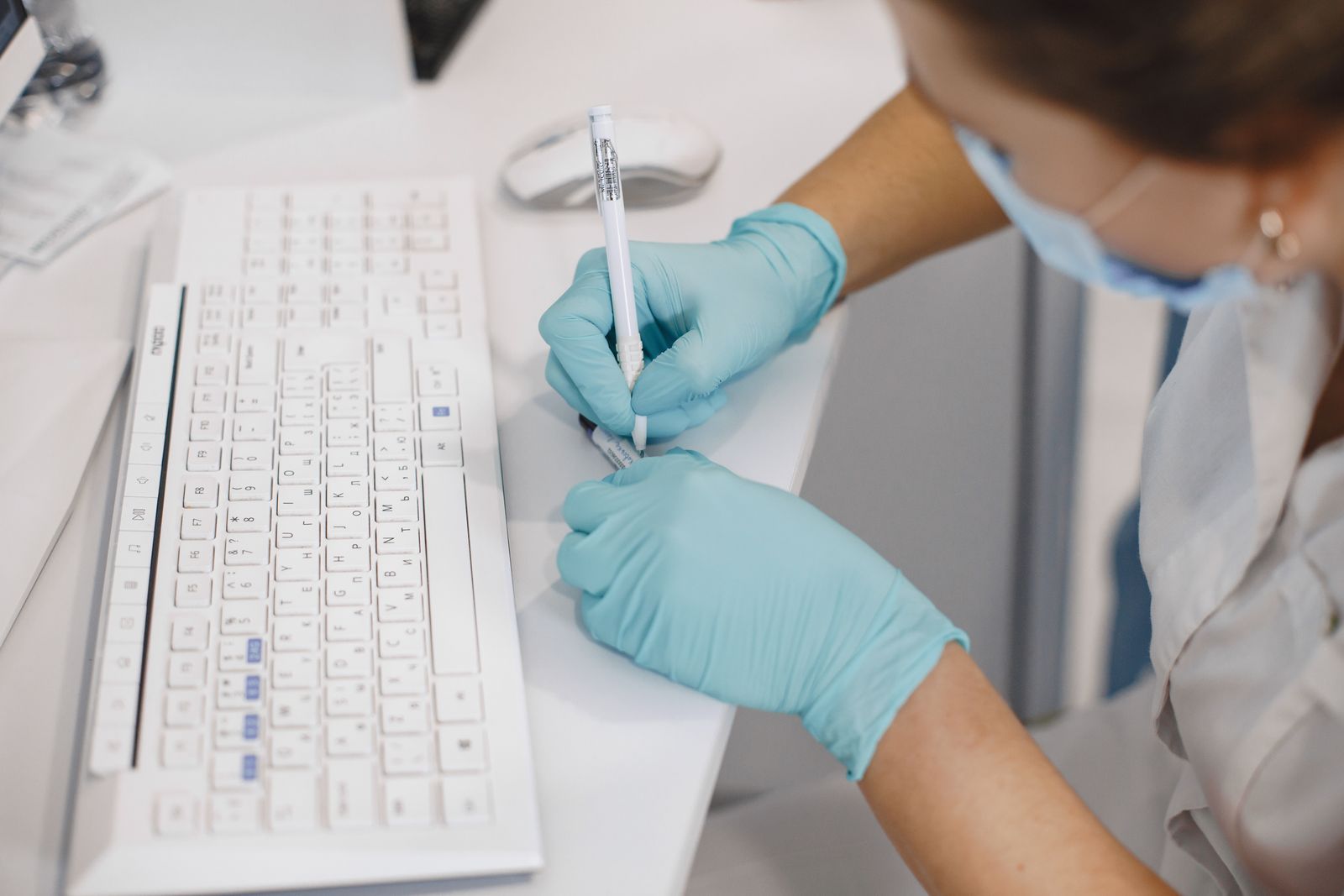
What a doctor's note can and cannot say, how it differs from an FMLA certification, and what happens for days no clinician observed.

Request a doctor’s note for work or school through an online visit. Message a provider with the dates you were unwell and what the note is for. The provider can assess you and document what the visit supports. A note cannot certify days nobody observed; the limits below explain what you can receive.
Care starts by chat with a licensed provider. Message us and we will confirm coverage in your state.
Yes. A clinician who sees you can write a note describing that visit. The note is a record of an encounter: it says you were seen, on what date, what was found or reported, and what the clinician advised about work or school going forward.
The part most people are actually asking about is the part that has a limit. A note documents what was observed or reported at a visit. It cannot certify a stretch of days nobody observed. That is not a policy we invented and it is not a technicality. Physicians are held to being honest in all professional interactions, and a document signed by a clinician is a professional statement about what that clinician knows.[6]
A useful, honest note usually contains some or all of the following:
It cannot say a clinician verified an illness on days when there was no clinician. If you were unwell last Monday and Tuesday and you are seen on Thursday, an accurate note says that you were seen Thursday and that you reported being unwell on those earlier days. It attributes those days to you, because that is who the information came from.
Some employers accept exactly that. Some do not, and ask instead for a note covering the days themselves, which nobody can honestly produce after the fact. Knowing which of those two you are dealing with before you spend money on a visit is worth more than any wording.
Often, no. Federal law does not require employers to provide sick leave at all, so there is no national rule saying a note is owed after one day, or three, or ever.[3] Whether you need documentation, and after how many days, comes from your employer's own policy, your union contract, or a state or city paid sick leave law. Read the policy first. Plenty of people book a visit for a note their handbook never asked for.
Usually not, and you can ask for it to be left out. Even under the Family and Medical Leave Act, where the paperwork is formal, a diagnosis is not required: the certification asks for medical facts about the condition, and the Department of Labor states the diagnosis itself is optional.[1] Confirmed as of 2026-09-03.
For an ordinary work note, the functional statement is the part your employer needs anyway. "Unable to work 3 to 5 September, may return 6 September" answers their question. "Acute gastroenteritis" answers a question they did not ask.
No, and this is the mix-up that costs people the most time. A doctor's note is an informal document between you, your clinician and your employer. An FMLA certification is a legal process with its own rules:
All of that is confirmed as of 2026-09-03. If what you need is protected leave for a real, ongoing condition, ask your employer for the certification form rather than paying for a one line note that will not do the job.
Three honest ones, and it is worth being blunt about each.
That is a different request with a different name. Under the Americans with Disabilities Act you can ask for a reasonable accommodation, and you do not need legal wording to do it. The Equal Employment Opportunity Commission is explicit that plain English is enough and you never have to say the words "ADA" or "reasonable accommodation" for the request to count.[5]
Where your condition and your need are not obvious, your employer may ask for reasonable documentation. What that documentation should cover is defined: the nature, severity and duration of the impairment, what it limits, how much it limits it, and why the specific accommodation is needed. Your employer is not entitled to your complete medical records, because those hold plenty that has nothing to do with the request.[5] Confirmed as of 2026-09-03. From there it becomes an informal back and forth between you and your employer about what would actually work.
A shaving profile is one familiar version of this, and we have written the process out for an ADA no shave accommodation.
The same principle holds, with two additions. Schools set their own attendance documentation rules, so the standard varies by district in a way no article can answer for you.
And for a child, the child is the patient. A note about a child requires that child to have been assessed, and we treat anyone 18 and under only with a parent or guardian's consent. If you are arranging care for your child through us, here is what we need from you before a provider can do anything.
When the symptom is the actual problem. Chest pain, trouble breathing, a spreading facial swelling, a rash near the eye, a fever in a small infant: these are visits about the illness, and the paperwork is an afterthought that can be sorted later. Two of those we have written up separately, because the timing matters more than most people realise: shingles and its 72 hour window and a dental infection.
You message us and describe what is going on and what your employer or school has asked for. A licensed provider reviews it in the same conversation. There is no appointment to book and no waiting room, and you can keep asking questions afterwards without paying again.
Letters are one of the things a provider can approve quickly, so once the provider has reviewed your encounter the document is usually issued within 15 minutes. The note comes to you, and you decide what to hand to your employer or school. If you also need paperwork for a health savings account, that is a different document, and we cover it in how to get a letter of medical necessity. Travelling with medication is a third one again, covered in the travel medication letter.
What we will write is what the provider can honestly say happened. If your situation needs something we cannot document, we will tell you that in the chat rather than take payment for a document that will not hold up. Message us and we will confirm coverage in your state.
$50 for a doctor's note. If approved, you will receive a doctor's note for work or school and 30 days of support. We are there for those 30 days for follow-up, interpretation, referrals, and treatment if needed. Perfect for a single episode of care.
Or $90 for the Unlimited Membership. If approved, you will receive 3 months of care with 7 days a week support, plus unlimited prescriptions, lab tests, imaging orders, letters and referrals with same day care, cancel anytime, no fees. Perfect for established patients looking for full care.
Care is chat-based with a licensed provider, same day, no appointment needed. Message us with the dates you were unwell and what the note is for, tell us where you are, and we will confirm coverage in your state and what the provider can honestly document.
Reviewed by PA Michael Rubio, US Medical Director
Concerned, need advice, a prescription, refill or referral?
Text a doctor now