Prevention
Online Doctor for a Sick Child
A child is 18 and under, and we treat them only with a parent or guardian's consent. What to have ready, and the signs that mean in person now.

PA Michael Rubio
September 9, 2026
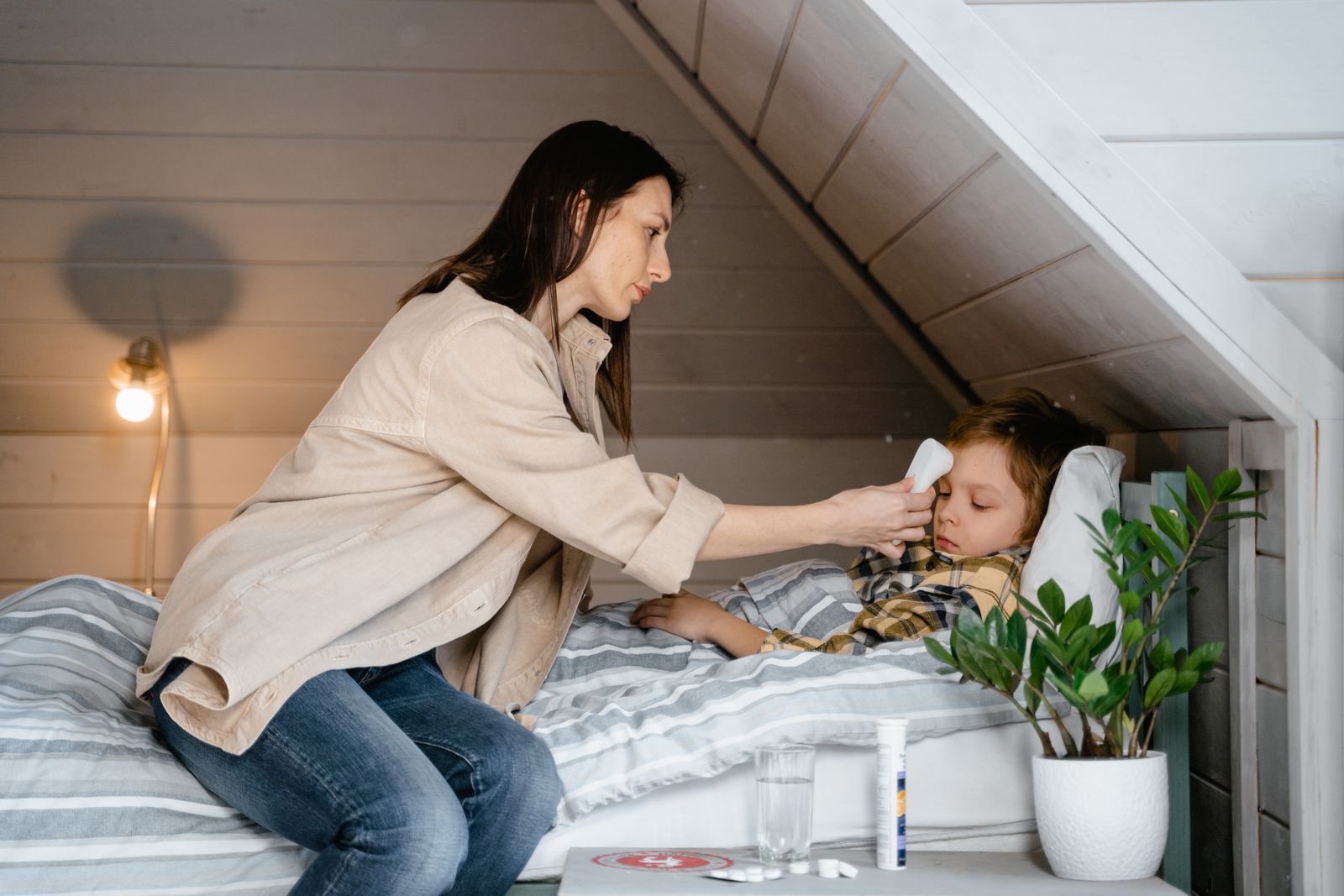
A child is 18 and under, and we treat them only with a parent or guardian's consent. What to have ready, and the signs that mean in person now.

Start with the rule, because it decides whether anything else happens. A child means 18 and under, and we treat a child only with the consent of a parent or legal guardian. Our intake asks for the child's age and confirms the person messaging is the parent or guardian. It is a gate, not a formality, and a request that cannot clear it does not proceed. There is no minimum age below that. Where a young baby is sent for in-person care on this page, that is a clinical call, not an age rule.
The second rule runs the other way. Some things about a sick child cannot be assessed through a screen. Those come first, because a parent reading this at 2am should hit them first.
Nothing below replaces that list.
If your child is not on that list, an online visit can genuinely help, and it works far better with these five things in hand. Pediatric telehealth exists because access to a pediatrician is uneven across the country, which is why the American Academy of Pediatrics supports it. [6]
Not a grandparent, an older sibling, a babysitter or a coach, unless legal guardianship is actually in place. Parental permission is the foundation of pediatric care, alongside involving the child as their age allows. [8] It holds through age 18, so a 17 year old still needs a parent or guardian on the request. Bring your teenager into the conversation, since they give the better history. The consent is still yours to give.
This is the biggest practical difference between treating a child and treating an adult. Children's doses are calculated per kilogram of body weight, not from a standard adult dose. Amoxicillin runs 20 to 45 mg per kilogram per day in children over 3 months. [4] A weight from last year's checkup can put that meaningfully off either way.
A home bathroom scale is good enough. With no scale, weigh yourself, then weigh yourself holding your child, send both numbers, and say it is an estimate.
The same number means different things taken rectally, under the arm, or across the forehead, so send the reading, the route and the time. For a baby under two months the reading that counts is rectal, against the threshold above. [1]
"Fever for four days, coughing since day two, has not eaten since yesterday, still drinking" tells a provider far more than "sick with a fever." Include what has changed, what you have already given and at what dose and time, wet diapers or bathroom trips, and how they behave between fevers. That last one carries weight: a child miserable at 103 F but playing an hour after medicine reads very differently from one who stays limp.
Being straight about the limits is the reason to trust the rest. A chat suits rashes with a clear photo, medication and dosing questions, minor injuries, pink eye, refills, school and camp forms, follow-up on something already diagnosed, and the common question of whether this is worth a trip anywhere. Two adjacent ones we get often: a dental infection and a school note.
A chat does not suit anything that needs hands on the child. Dehydration is the clearest case: the signs that actually predict it are capillary refill time, skin turgor and breathing pattern, and history questions alone perform poorly. [3] An ear that needs looking into, a belly that needs pressing, a chest that needs listening to, and any breathing concern belong in a room with a clinician.
One honest caveat about this lane. In a large claims study, children seen for respiratory infections at direct to consumer telemedicine visits got antibiotics 52% of the time against 31% at a primary care office, with guideline-concordant management in 59% of visits against 78%. [7] Most childhood coughs and colds are viral, so a visit ending in an explanation and a comfort plan is often the correct outcome.
Use the oral syringe that came with the medicine. Among 2,110 parents measuring doses in a randomized experiment, 84.4% made at least one dosing error and 21% made one of more than double the intended dose, with errors over four times as likely using a cup. [5] Kitchen teaspoons are not a measuring device, and mismatched units on the bottle and the syringe are worth a question rather than mental arithmetic. [5]
$50 for a prescription or referral. If approved, you will receive a plan for your child, with a prescription or referral if one is needed, and 30 days of support. We are there for those 30 days for follow-up, interpretation, referrals, and treatment if needed. Perfect for a single episode of care.
Or $90 for the Unlimited Membership. If approved, you will receive 3 months of care with 7 days a week support, plus unlimited prescriptions, lab tests, imaging orders, letters and referrals with same day care, cancel anytime, no fees. Perfect for established patients looking for full care.
It happens in chat with a licensed US provider, same day, no appointment, and you keep the thread afterwards for the questions that come at 9pm. Confirm you are the parent or legal guardian, send the weight, the temperature with its route, the timeline and any photos, and you get either a plan or a plain statement that this one needs to be seen in person. Message us and we confirm coverage in your state. If COVID is the question, timing beats everything else: see how fast antivirals have to be started.
Yes, with the consent of a parent or legal guardian, which our intake asks for directly. A child means 18 and under, and a request without that consent does not go ahead.
Yes. The rule runs through age 18. Involve them in the conversation, since a teenager gives the better account of their own symptoms, but the consent is yours to give.
Only if you are the child's legal guardian. Otherwise consent comes from the parent or guardian, even when you are the one at the bedside.
A rectal 100.4 F (38.0 C) or higher in the first two months needs in-person evaluation the same day, because the standard workup at that age involves tests that cannot be done through a screen. [1] Go to an emergency department or your pediatrician now. For older children, message us and we will say honestly whether this is one to manage at home.
Reviewed by PA Michael Rubio, US Medical Director
Concerned, need advice, a prescription, refill or referral?
Text a doctor now