The short version
Tretinoin needs no blood tests, no swabs, and no in-person exam for a typical case. Acne is diagnosed by looking: the kind of lesions you have, where they are, and how severe they run. [1][2] What the evaluation does need is honest photos and a short history, because a handful of answers genuinely change what gets prescribed: pregnancy, sensitive-skin conditions like eczema and rosacea, your sun exposure, and what is already in your routine. [1][2]
This article is that checklist in full, with why each item is asked. If a website will sell you tretinoin without asking any of it, the evaluation is being skipped, not streamlined.
The photos: what a provider is actually reading
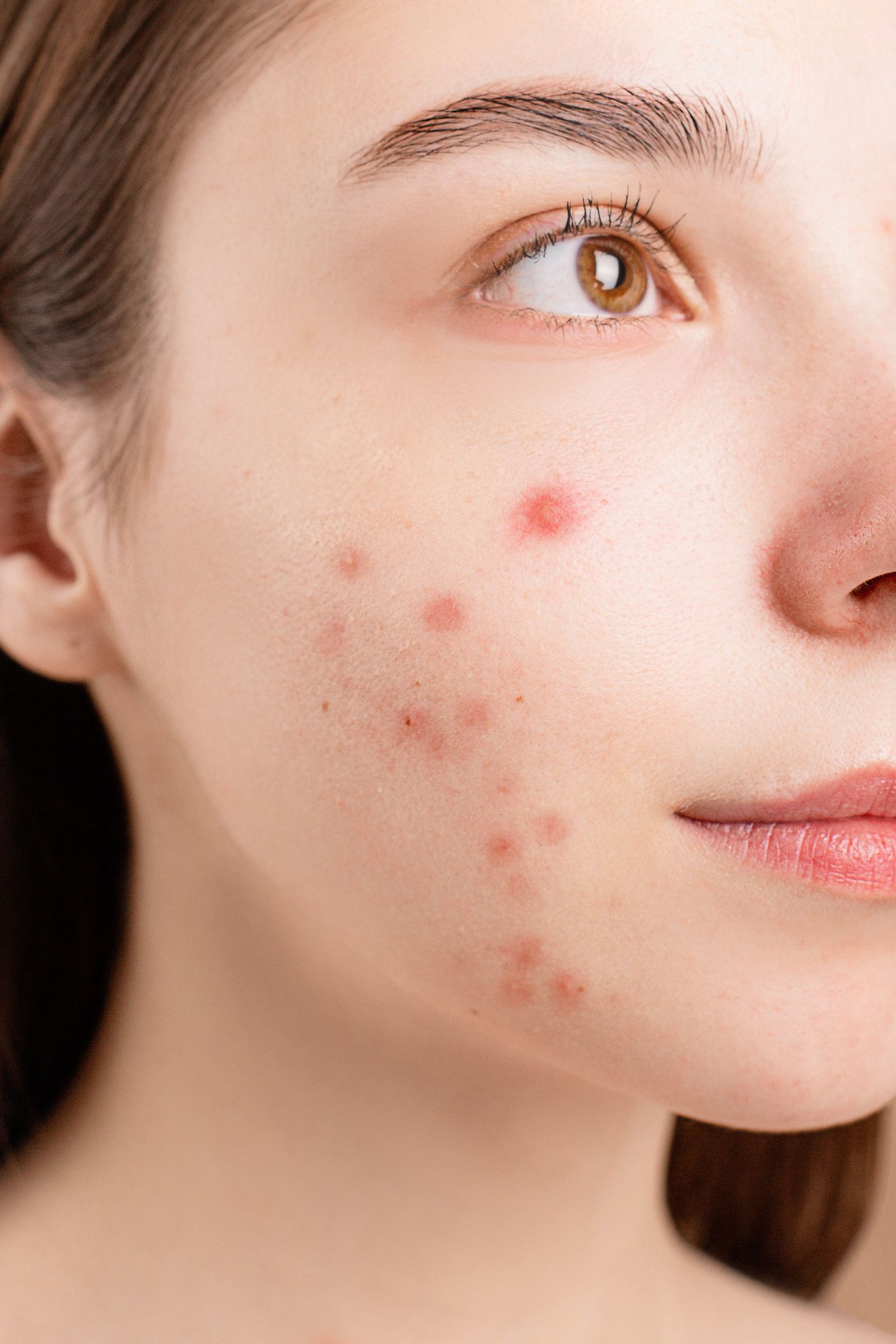
Three things get read off your photos and description. First, the lesion mix: blackheads and whiteheads point to comedonal acne, red inflamed bumps to inflammatory acne, and deep, painful lumps to nodulocystic disease. [1][2] Second, distribution: face only, or chest and back too. Third, severity and scarring, because those two findings change the whole plan. Tretinoin is first-line for comedonal and mild-to-moderate inflammatory acne; nodules and scarring belong in a different conversation entirely, covered in when acne needs more than tretinoin. [1][2]
Photo-based evaluation works when the diagnosis is clear and the history is honest. Its known limit is the lookalikes: rosacea and perioral dermatitis can pass for acne in a bad photo, and both get worse on tretinoin. [1] Good close-ups in natural light, and a mention of anything that stings or flushes easily, are what protect you from that mistake.
The one question that overrides everything
Are you pregnant, breastfeeding, or planning pregnancy? Topical retinoids are generally avoided in pregnancy. The honest detail: human observational data on topical tretinoin have not established a link to birth defects, and very little of it absorbs through skin, but guidelines still prefer better-studied options in pregnancy, azelaic acid, topical clindamycin, or benzoyl peroxide. [1][3] So a yes here does not end your acne treatment; it redirects it. Breastfeeding is generally considered compatible with topical tretinoin. [1] Planning pregnancy soon is worth saying out loud, because it usually means starting on a pregnancy-preferred agent rather than switching mid-course.
The skin history that changes the starting point
- Eczema or atopic skin. A fragile barrier makes tretinoin irritation more likely; providers start lower, go slower, or suggest adapalene, which is gentler. [1][2]
- Rosacea or easy flushing. A reason to look twice at the diagnosis before prescribing at it. [1]
- Heavy sun exposure. Outdoor work or a sunny climate does not rule tretinoin out, but it makes the daily-sunscreen instruction load-bearing, because tretinoin increases sun sensitivity. [3][4] Sunburned skin waits until it is fully recovered before starting. [3]
- Your current routine. Benzoyl peroxide inactivates conventional tretinoin applied at the same time, so the two get scheduled apart, morning and night. [1][2] Harsh scrubs, strong acids, and high-alcohol toners multiply irritation, and skin that has been through them recently gets a rest before starting. [3]
- Recent or planned waxing and peels. Tretinoin-treated skin can lift with waxing; these get coordinated, not discovered. [3]
What is deliberately not on the list
No blood work, ever, for topical tretinoin; that requirement belongs to isotretinoin, the oral drug, which is a different medicine with a formal monitoring program. [1][2] No routine hormone testing either, unless the pattern suggests a hormonal driver, which is a referral conversation, not a checkout question. [1][2]
Once the check is done, treatment starts the same day: strength selection is covered in the strengths article, and your first application in the first-night briefing. If insurance is your obstacle rather than the evaluation, here is the cash-pay path.
What it costs with Well Revolution
$80 for the Limited Treatment Plan. If approved, you will receive a 90 day treatment plan with 7 days a week support. Perfect for first time patients who are trying it out.
Or $90 for the Unlimited Membership. If approved, you will receive 3 months of care with 7 days a week support, plus unlimited prescriptions, lab tests, imaging orders, letters and referrals with same day care, cancel anytime, no fees. Perfect for established patients looking for full care.
Getting started with Well Revolution
The whole evaluation above happens in chat with a licensed US provider, same day, no appointment: photos, the history questions, and a plan that fits your skin rather than a template. Message us and we confirm coverage in your state. The full process is in how to get a tretinoin prescription online.
References
- Eichenfield DZ, et al. Management of Acne Vulgaris: A Review. JAMA, 2021. PubMed 34812859
- Reynolds RV, et al. Guidelines of care for the management of acne vulgaris. Journal of the American Academy of Dermatology, 2024. PubMed 38300170
- Retin-A (tretinoin) prescribing information. Via FDA DailyMed. DailyMed
- Weiss JS, et al. Topical tretinoin improves photoaged skin. A double-blind vehicle-controlled study. JAMA, 1988. PubMed 3336176
Reviewed by PA Michael Rubio, US Medical Director