Get new hair loss assessed instead of guessing whether creatine is the cause. Send photos of your hairline, crown and part, when the shedding started, your medications and supplements, and any family history of thinning. Start an online visit to discuss the hair loss and the next step. The evidence below helps you bring the creatine question to that visit.
Care starts by chat with a licensed provider. Message us and we will confirm coverage in your state.
1 Big Thing
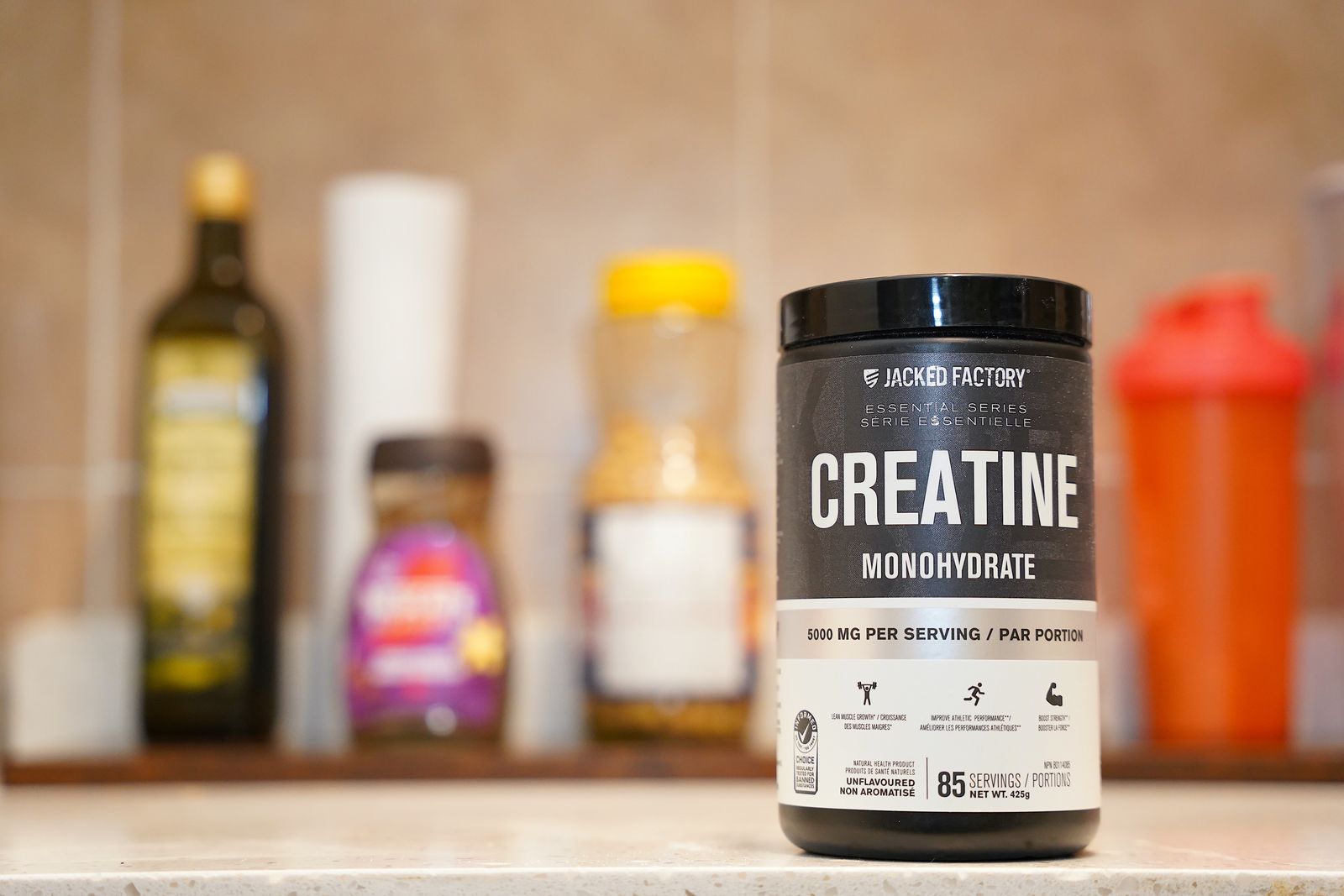
The idea that creatine causes hair loss comes almost entirely from one small study. In 2009, a three week trial in 20 college aged rugby players in South Africa found that a creatine loading dose raised blood levels of dihydrotestosterone (DHT) by 56 percent after one week, and DHT stayed 40 percent above baseline after two more weeks at a lower maintenance dose. [1] It did not look at hair. It measured hormones and body composition. [1]
In 2025, a larger and longer randomized controlled trial set out to test the claim directly. Forty five resistance trained men aged 18 to 40 took either 5 g of creatine monohydrate a day or a placebo for 12 weeks, with blood tests for testosterone and DHT, plus scalp measurements of hair density, follicular unit count and cumulative hair thickness. [2] There were no significant differences between the creatine and placebo groups in DHT, the DHT to testosterone ratio, or any hair measure. [2]
Why It Matters
Creatine is one of the most widely used supplements in the gym, and the International Society of Sports Nutrition lists "does creatine cause hair loss or baldness" among the most common questions it fields about it. [3] People stop a supplement that works, or blame it for shedding with another cause that goes undiagnosed. If your hair is thinning, the question that matters is not "is it the creatine" but "what type of hair loss is this," because the answer decides whether it grows back on its own or needs treatment.
Between the Lines
The 2009 result was a hormone reading, not a hair outcome, in 20 people, over three weeks, using a loading protocol of 25 g a day for the first week. [1] That is five times the 3 to 5 g a day the sports nutrition literature describes as the standard dose. [3] The 2025 trial used the standard 5 g dose for 12 weeks, measured the hair itself, and its authors called the result strong evidence against the claim. [2] A small trial that found a hormone shift, followed by a larger one that found neither the shift nor any hair change, is a reason to look elsewhere when hair is falling out.
Go Deeper
Why DHT gets blamed comes down to what it does to a follicle, and why that only matters for some people.
DHT and the follicle. Male and female pattern hair loss, known medically as androgenetic alopecia, is driven by androgens, and specifically by DHT. [4] Too much androgen stimulation of a follicle shortens its growth phase, so each cycle produces a shorter, thinner hair, a process called miniaturization. [4]
Why it only happens to some people. Everyone with normal testosterone makes DHT. What differs is the follicle. Variations in the androgen receptor gene produce receptors that are more easily stimulated than normal, which increases androgen activity inside the follicles that carry them. [4] Without that sensitivity, DHT circulates and the hair stays. With it, ordinary DHT levels are enough to start miniaturization in the pattern your family history predicts. [4]
How common that sensitivity is. Androgenetic alopecia affects an estimated 50 million men and 30 million women in the United States, and more than half of men over 50 have some degree of it. [4] It is the most common cause of hair loss worldwide. [5] Many men who start creatine in their twenties were already on a genetic path to thinning, and the supplement gets the credit.
Can a supplement cause pattern baldness on its own?
Not by any mechanism the evidence describes. Pattern hair loss needs a follicle with the inherited sensitivity, and DHT acting on it over years. [4] A supplement cannot give you the gene. The honest open question is narrower: if someone already has sensitive follicles and is already miniaturizing, could a modest rise in DHT nudge the process along? The 2009 authors raised that possibility and called for further investigation of long term safety. [1] The 2025 trial, at the standard dose and with hair measured, found no such effect. [2] We would not tell a man with a strong family history that the risk is provably zero, but the evidence does not support stopping creatine to protect his hair.
What else causes shedding in people who lift?
The timing often points away from creatine. The American Academy of Dermatology lists several causes that show up in exactly this population. [5]
- Stress shedding (telogen effluvium). A few months after an illness, surgery or a major stressor, a lot more hair comes out in the brush and shower. [5] Once the trigger is over, most people see normal fullness return within 6 to 9 months. [5]
- Nutrient gaps. Not getting enough iron, protein, zinc or biotin can cause noticeable hair loss, and it regrows once the body gets the missing nutrient. [5] A restrictive cutting diet is the usual culprit here.
- Tight hairstyles. Hair that is continually pulled back tightly can lead to permanent loss at the hairline. [5] If you train in a tight bun or braids, see our piece on traction alopecia from tight hairstyles.
- Medications. Hair loss is a possible side effect of some medications, and the right move is to ask the prescriber rather than stop on your own. [5] Be candid with your provider about anabolic steroids and hormone products.
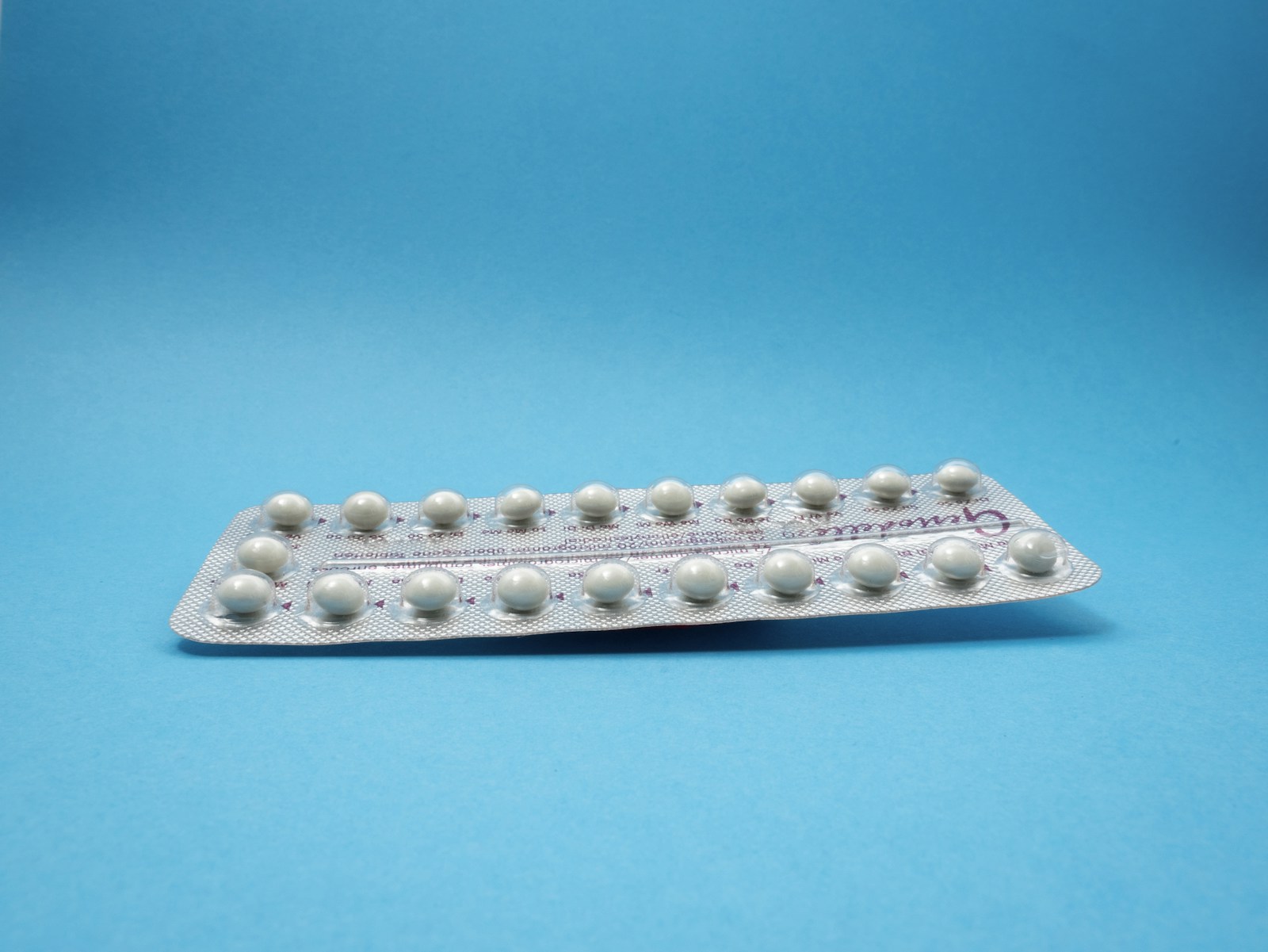
- Hormonal shifts. Coming off a hormonal contraceptive can trigger a shedding phase. See hair loss after stopping birth control.
How do I know if it is genetic or something else?
Pattern loss and shedding look different, and a provider can usually tell them apart from photos and a history. Pattern loss in men shows up as a receding hairline and a thinning crown, and in women as widening of the part with the front hairline preserved. [4] Diffuse shedding from stress or a nutrient gap comes out everywhere at once and tends to follow a trigger by two to three months. [5] A family history of early thinning makes the genetic explanation far more likely. [4] The two paths lead to different plans: one corrects the trigger and waits, the other starts treatment early, while there is still follicle to save. Our guide to what your provider checks before starting hair loss treatment walks through the questions.
Should I stop creatine to be safe?
If your hair is fine, there is no evidence based reason to stop. [2][3] If you are shedding and want to run your own test, stopping for three months and photographing your hairline and crown under the same light is reasonable, but pattern loss progresses slowly and stress shedding resolves on its own over months, [5] so a change in either direction is easy to attribute to the wrong thing. A diagnosis is faster and more reliable.
What is the treatment if it is androgenetic alopecia?
The same DHT biology that gets creatine blamed is the target of the main prescription treatment. Finasteride blocks the enzyme that converts testosterone to DHT, and it is FDA approved for male pattern hair loss in men only. [6] It is not indicated for women, and it is contraindicated in women who are or may become pregnant, because lowering DHT can affect development of the genitals in a male fetus; women who are or may be pregnant should not handle crushed or broken tablets. [6] Minoxidil is the non prescription option the American Academy of Dermatology names as the most recommended treatment for female pattern hair loss, and it has long been used for men. [5] Doses, timelines and the honest side effect list are in hair loss medication dosing and what to know before your first finasteride dose. Some cases need a dermatologist before any of this, and when hair loss needs a dermatologist first says which.
Closing
The short answer: the evidence does not show that creatine causes hair loss. One three week study of 20 men found a rise in DHT and did not look at hair; [1] the 12 week trial that did look at hair, using the standard dose, found no change in DHT or in any hair measure. [2] Pattern hair loss needs inherited follicle sensitivity, decided long before you pick up a scoop. [4] If you are losing hair, get it diagnosed: the treatable window for androgenetic alopecia is early, and the other common causes usually resolve once their trigger is found. A full plan is laid out in how to get a hair loss prescription online.
What it costs with Well Revolution
$80 for the Limited Treatment Plan. If approved, you will receive a 90 day treatment plan with 7 days a week support. Perfect for first time patients who are trying it out.
Or $90 for the Unlimited Membership. If approved, you will receive 3 months of care with 7 days a week support, plus unlimited prescriptions, lab tests, imaging orders, letters and referrals with same day care, cancel anytime, no fees. Perfect for established patients looking for full care.
Getting started with Well Revolution
Care is chat-based with a licensed provider, same day, no appointment needed. Send clear photos of your hairline, crown and part under good light, when the shedding started, every supplement and medication you take including creatine, and whether a parent or sibling thinned early. We confirm coverage in your state before anything is committed.
References
- [1] van der Merwe J, Brooks NE, Myburgh KH. Three weeks of creatine monohydrate supplementation affects dihydrotestosterone to testosterone ratio in college-aged rugby players. Clinical Journal of Sport Medicine, 2009. https://pubmed.ncbi.nlm.nih.gov/19741313/
- [2] Lak M, Forbes SC, Ashtary-Larky D, et al. Does creatine cause hair loss? A 12-week randomized controlled trial. Journal of the International Society of Sports Nutrition, 2025. https://pubmed.ncbi.nlm.nih.gov/40265319/
- [3] Antonio J, Candow DG, Forbes SC, et al. Common questions and misconceptions about creatine supplementation: what does the scientific evidence really show? Journal of the International Society of Sports Nutrition, 2021. https://pubmed.ncbi.nlm.nih.gov/33557850/
- [4] MedlinePlus Genetics, National Library of Medicine. Androgenetic alopecia. https://medlineplus.gov/genetics/condition/androgenetic-alopecia/
- [5] American Academy of Dermatology. Hair loss: who gets and causes, and Female pattern hair loss. https://www.aad.org/public/diseases/hair-loss/causes/18-causes and https://www.aad.org/public/diseases/hair-loss/types/female-pattern
- [6] Organon LLC. PROPECIA (finasteride) tablet prescribing information. DailyMed, National Library of Medicine. https://dailymed.nlm.nih.gov/dailymed/drugInfo.cfm?setid=6f904709-65aa-44ce-b144-b4c8a0416e36
Reviewed by PA Michael Rubio, US Medical Director