Medications
How to Tell Normal GLP-1 Effects from “Stop Now” Warnings
Know what’s normal on GLP-1s vs true red flags. Simple checks for nausea, headaches, and when to stop and call a provider.

Well Revolution
October 14, 2025
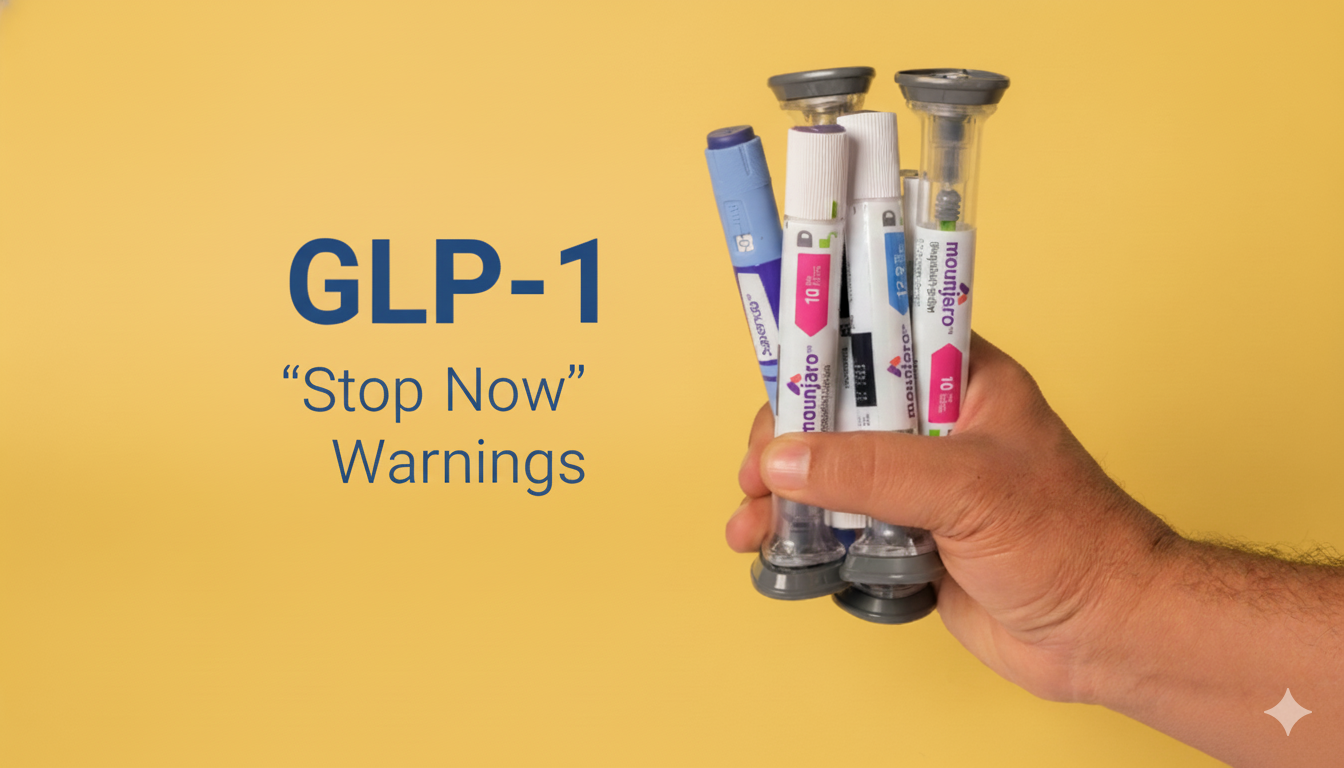
Know what’s normal on GLP-1s vs true red flags. Simple checks for nausea, headaches, and when to stop and call a provider.

GLP-1 receptor agonists such as liraglutide, semaglutide, dulaglutide, exenatide, and lixisenatide (and the related dual GIP/GLP-1 agent tirzepatide) often cause short-lived nausea, diarrhea, constipation, headache, and dizziness during dose escalation. These effects are expected and usually manageable with slower titration and small, low-fat meals [1–4].
If you’re using a GLP-1 for diabetes, weight management, or exploring off-label migraine prevention, knowing what’s “normal and temporary” versus “stop now” keeps you safe without abandoning a therapy that might help [1–5].
True emergencies are uncommon but real. Suspected pancreatitis, serious allergy, or acute gallbladder disease means stop the drug and get evaluated. Hypoglycemia is unusual unless a GLP-1 is combined with insulin or a sulfonylurea, in which case other meds may need dose reductions [1–5].
During the first weeks or dose increases, nausea, vomiting, diarrhea, early satiety/bloating, constipation, mild headache, fatigue, dizziness, and weight loss are well-described class effects. They typically improve with time, start-low, go-slow titration, and simple nutrition tweaks (smaller, lower-fat meals; avoid heavy, greasy foods) [1–4]. These symptoms do not imply underlying GI pathology and are not, by themselves, a reason to stop therapy unless they become severe or persistent [1–3].
Practical tips: eat smaller portions, sip fluids regularly, consider electrolytes if queasy, and ask your clinician about slowing titration or using short-term anti-nausea strategies if needed [2–4].
Contact your clinician the same day if you have worsening or persistent GI symptoms that limit eating or drinking, marked headache escalation that doesn’t settle with hydration and meal routine, or any new, unusual symptoms you haven’t had before. These may still be manageable with dose adjustments, but they deserve a check-in [2–5].
Hypoglycemia: not expected with GLP-1s alone, but the risk rises when combined with insulin or sulfonylureas. Proactively down-titrating those agents and home glucose monitoring can reduce risk [1–5].
Diabetic retinopathy: rapid glucose improvement with injectable semaglutide has been associated with retinopathy complications in people with established proliferative disease. Keep regular eye exams and coordinate with ophthalmology [1,6].
Emerging/rare reports: acute kidney injury, hair loss, or mood changes have been described, but causality remains uncertain. Document symptoms and discuss ongoing risk-benefit with your clinician [2,5].
Most early GI complaints and mild headaches are expected, temporary, and manageable with slower titration and meal adjustments. Stop now and seek care for red-flag abdominal pain, hypersensitivity, signs of gallbladder disease, or dehydration with kidney risk. If you’re combining a GLP-1 with insulin or a sulfonylurea, plan ahead to adjust doses and prevent hypoglycemia. Keep eye follow-up if you have pre-existing retinopathy.
Health concerns, no matter how minor they may seem, can severely impact your overall well-being and quality of life. If you're experiencing symptoms or have concerns about a specific health condition, remember that timely and expert advice is key. Navigating healthcare can be challenging, but finding the right primary care physician shouldn't be. Whether you're seeking medical advice, a prescription or care, immediate access to expert primary care is just a button away. Don’t leave your health to chance - consult a Well Revolution primary care provider today for peace of mind and professional care.
Concerned, need advice, a prescription, refill or referral?
Text a doctor now